Dutch
One platform for the whole casual dine-in experience.
- Year
- 2021
- Role
- Interaction Designer, Visual Designer
- Tags
- UIUX designInteractive Design
Casual dining still runs on paper.
Analog processes in casual dining hurt customer service and the restaurant's operational efficiency at the same time. Dutch is an easy-to-use platform for managing the entire casual dine-in experience.
Casual dining still runs on paper.
Analog processes in casual dining hurt customer service and the restaurant's operational efficiency at the same time. Dutch is an easy-to-use platform for managing the entire casual dine-in experience.
Orders are tracked on paper and progress is relayed verbally. Diners cannot see how long their food will take, and managers cannot see the state of their own floor.
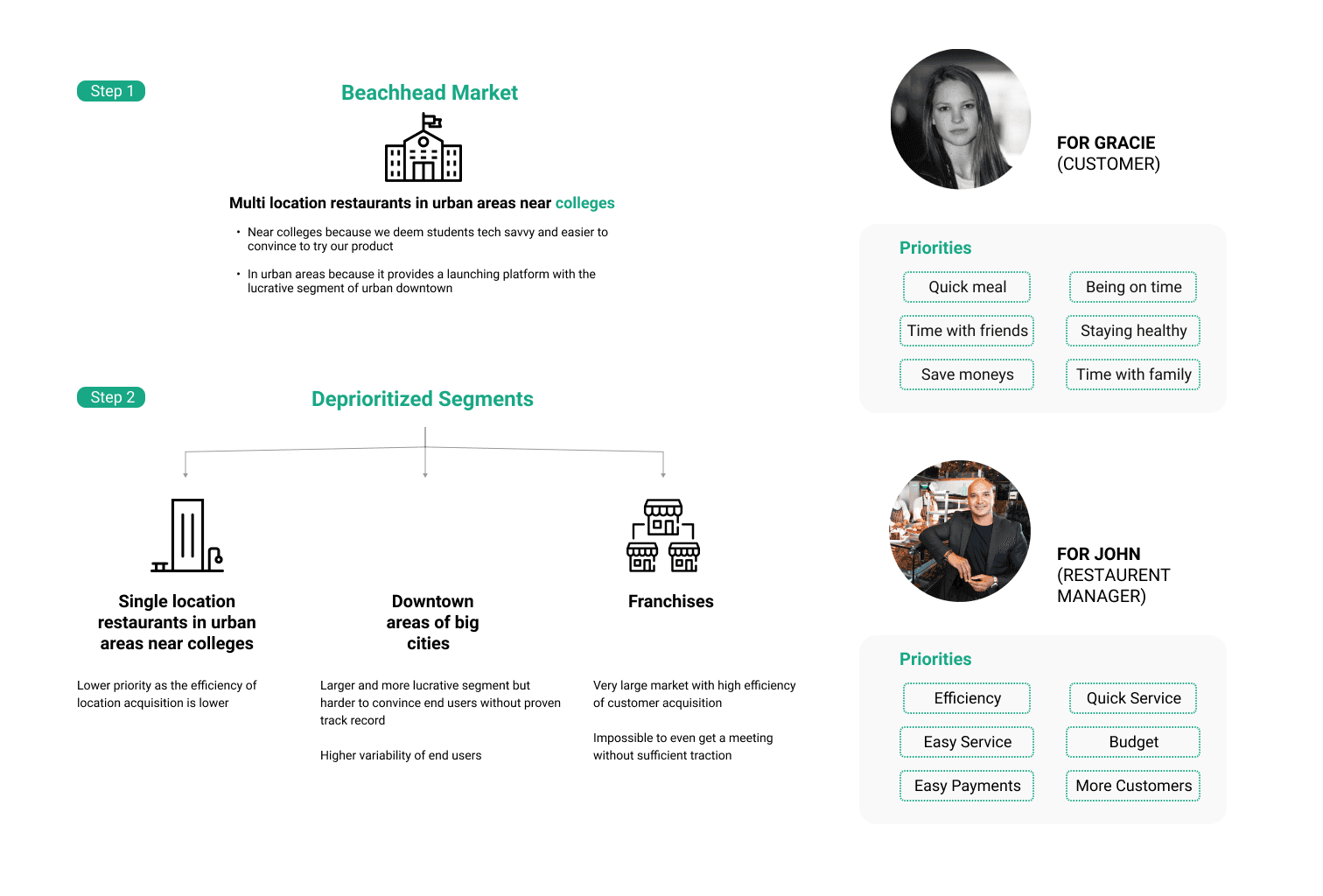
We picked a beachhead market: restaurants in urban areas near colleges. The area is dense with restaurants and gives two fairly homogeneous user groups, student diners and budget restaurant owners.
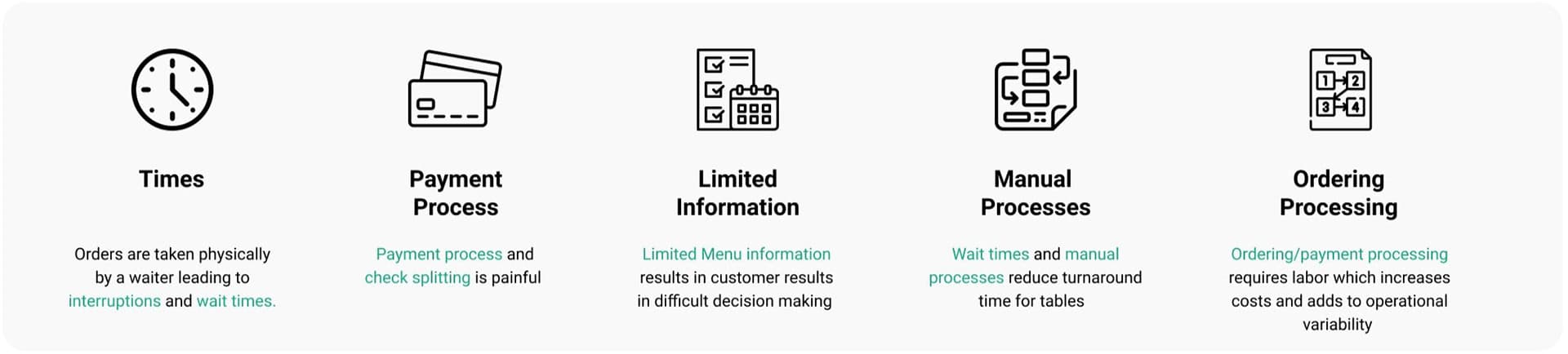
Interviews kept returning to time. Students told us honest wait times decide where they eat, because they have classes to get to. Managers told us customers get rude when food is late and do not understand how hard orders are to track when the record is a paper ticket.
Mapping the visit lifecycle showed where the analog steps pile up: arrival, ordering, waiting, paying.
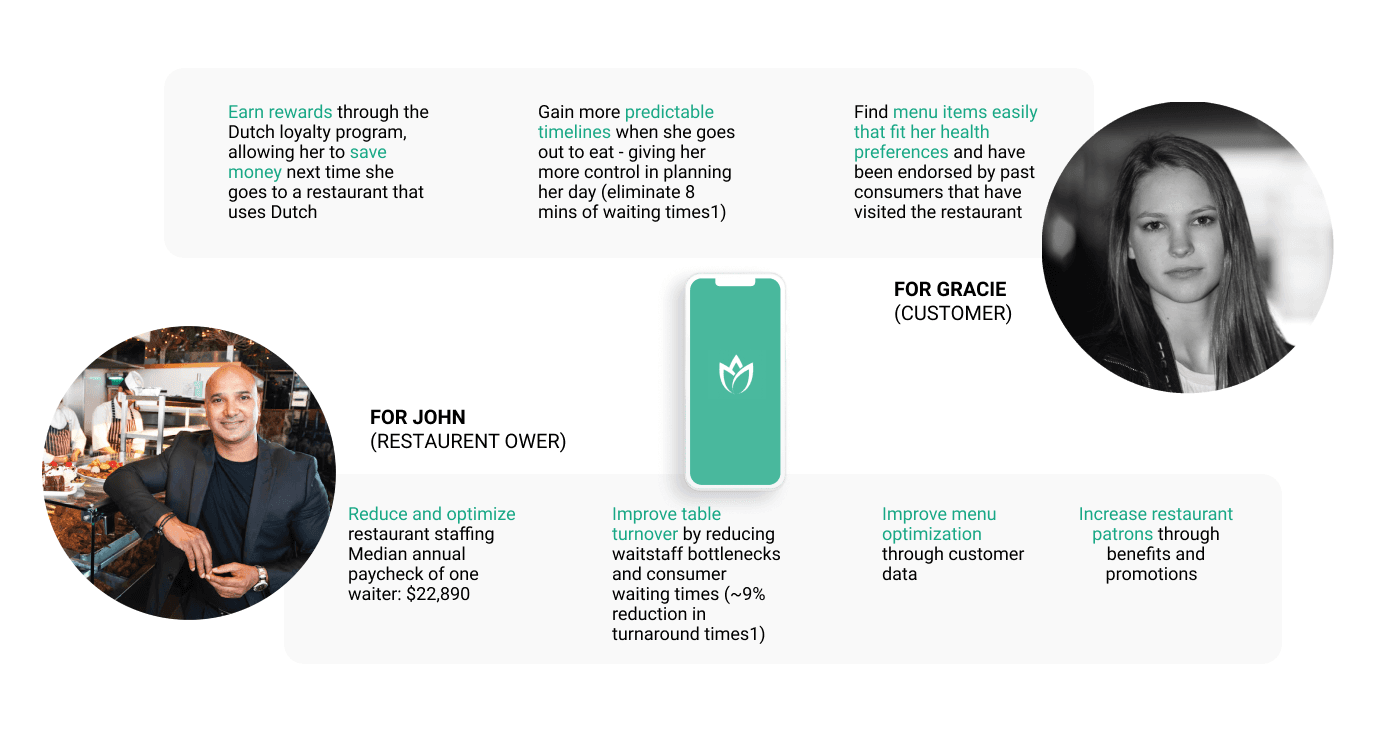
The findings collapsed into two feature families. Real-time data covers live order tracking and honest wait times. The dynamic menu carries granular detail like prep speed, allergens, and per-dish reviews, because different diners choose on different things.
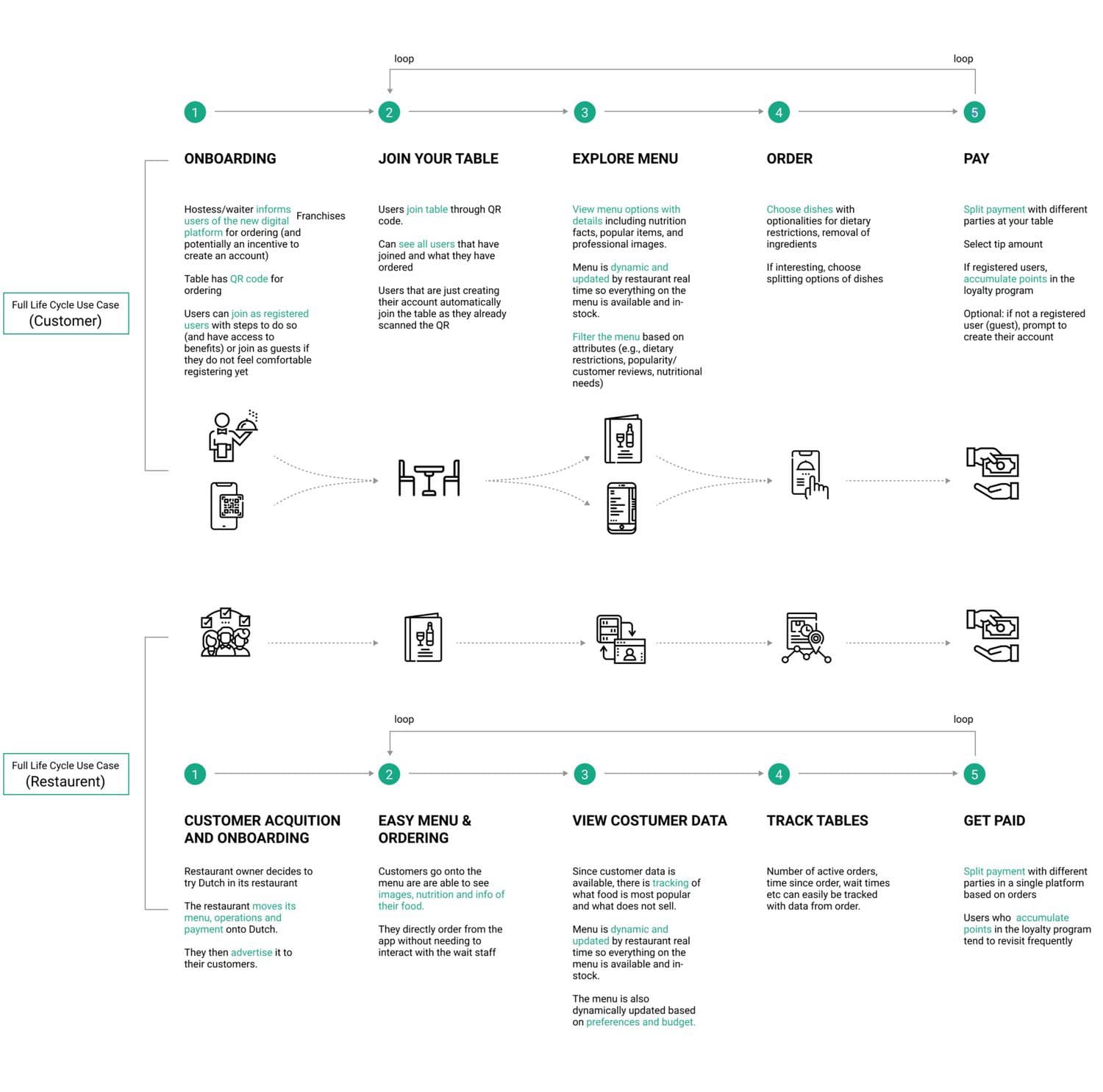
Each feature solves for efficiency, time, or data. Waiters stop being a bottleneck for paying or splitting the bill. Customers get an ETA on their order. Menus answer the questions people used to ask the staff.
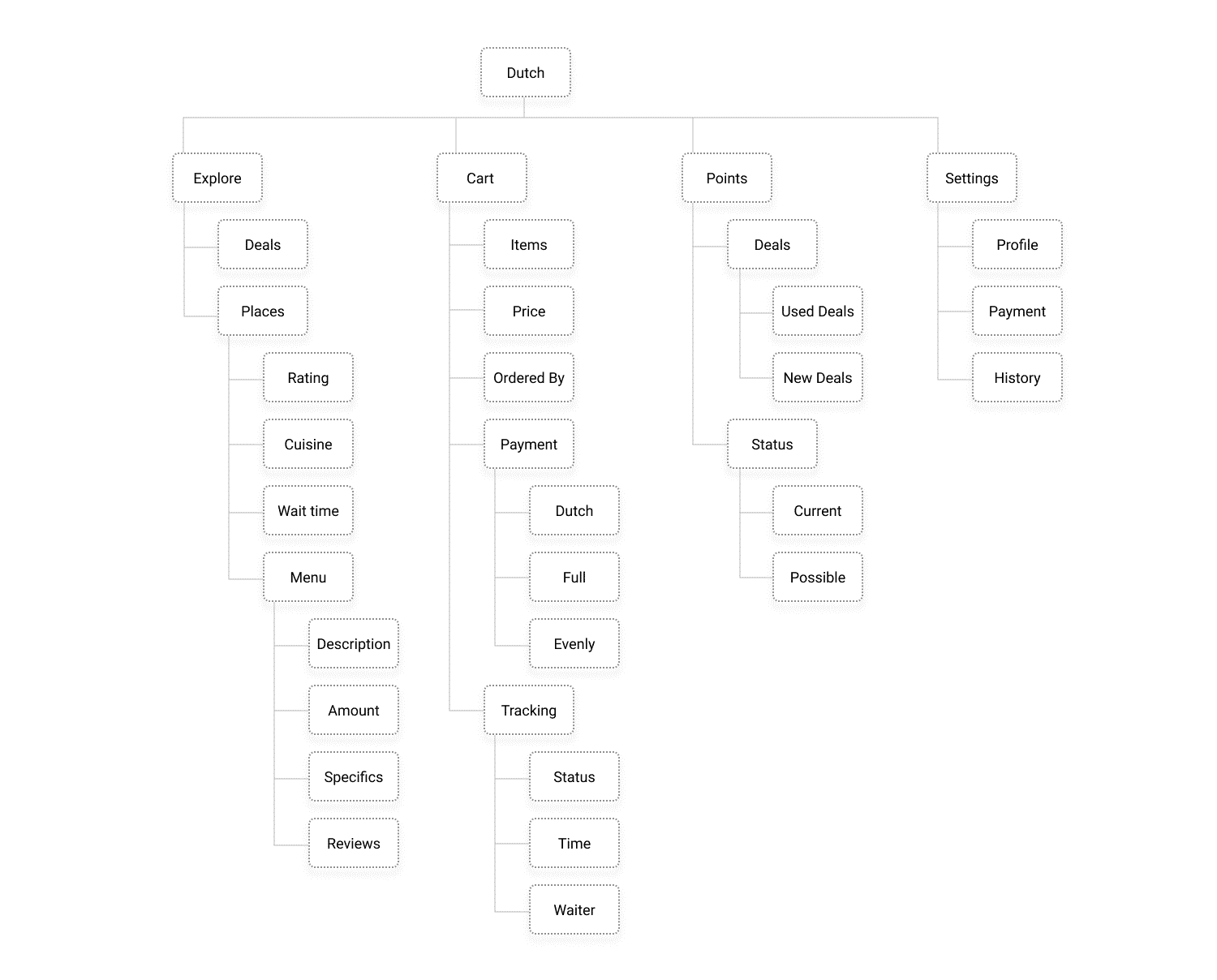
The information architecture runs from exploring restaurants through joining a table, ordering, tracking, and paying, with no waiter required for any transactional step.
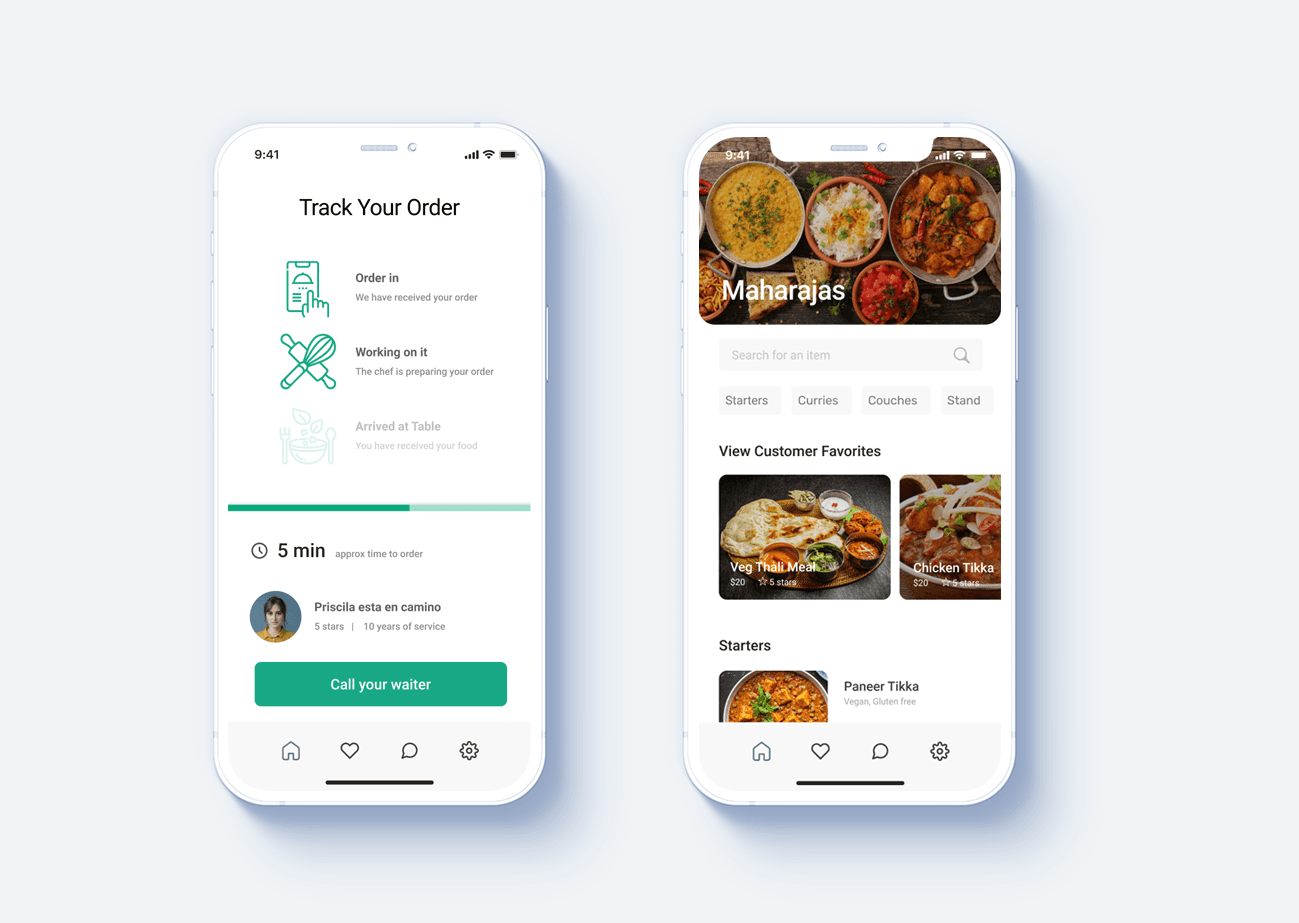
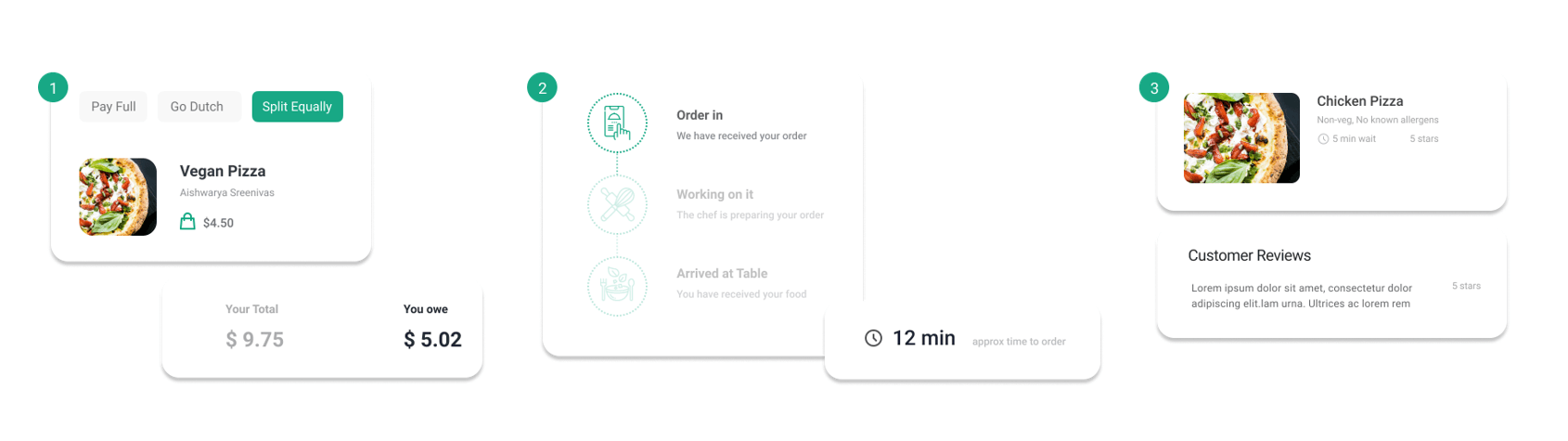
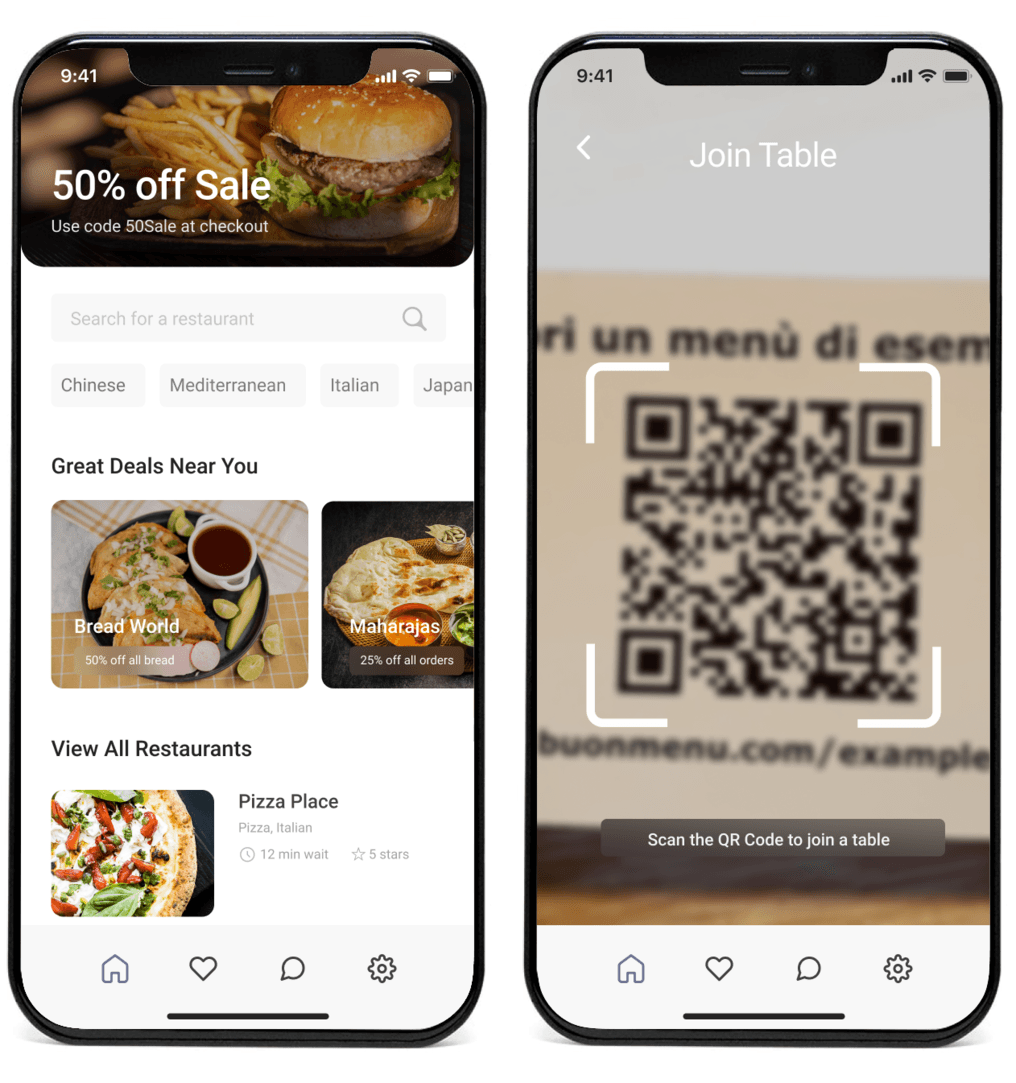
Users explore restaurants near them, with deals targeted from their dining history. Scanning a QR code joins the table and opens ordering without waiting for a server or going up to the counter.
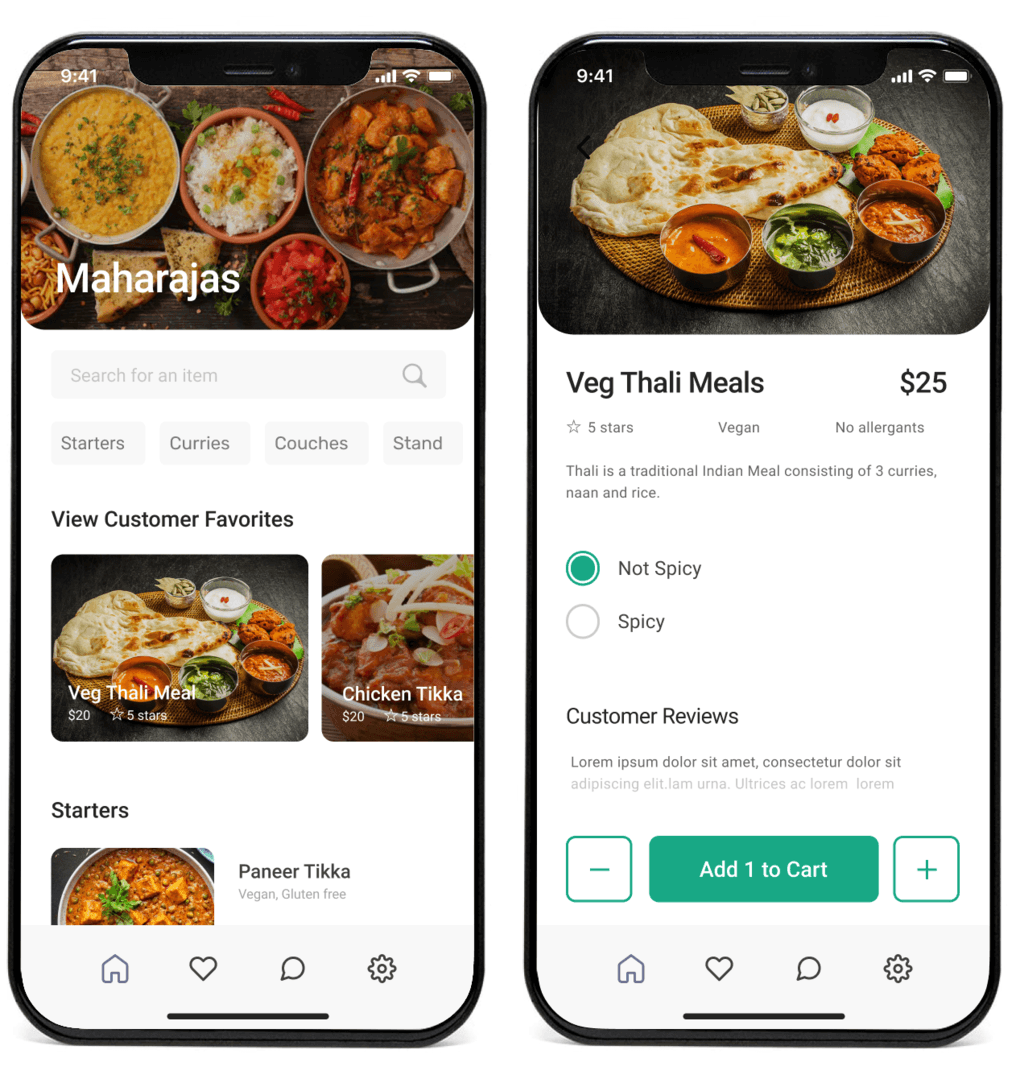
The menu shows best-rated dishes, customer reviews, and allergens. After ordering, a live estimate shows when the food will arrive, so people can plan their time.
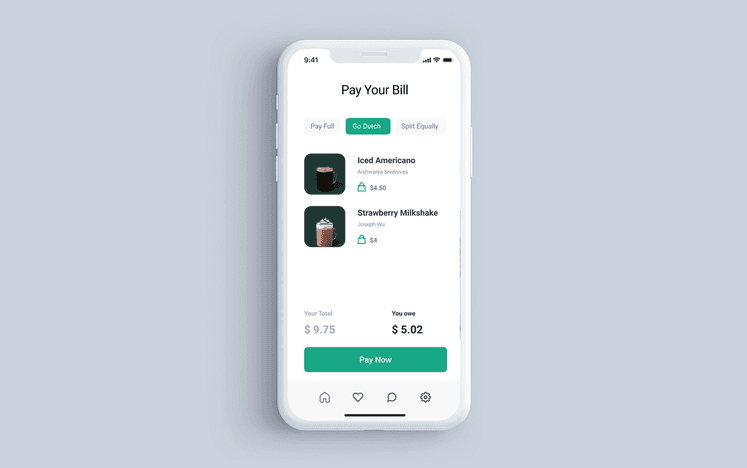
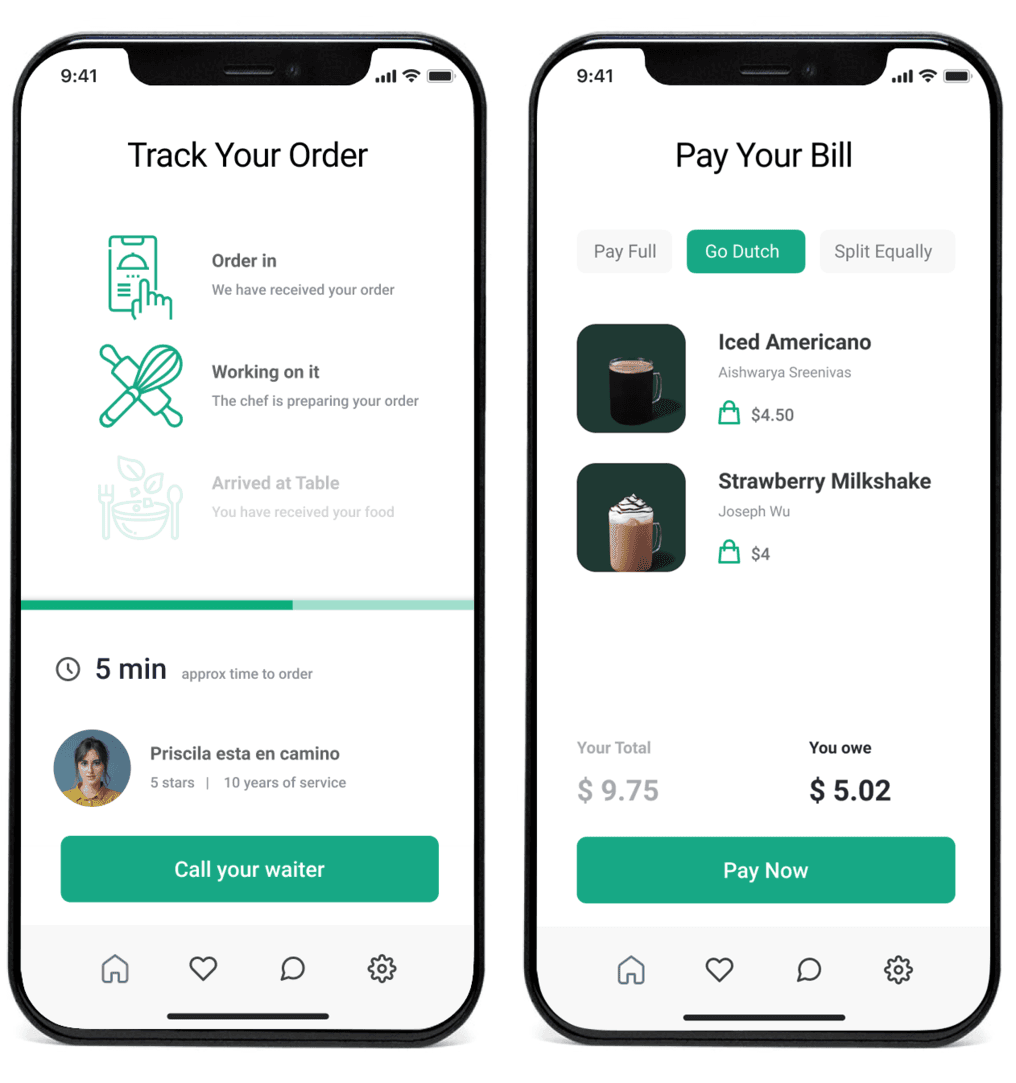
At the end of the meal the table sees what everyone ordered, chooses how to split, and pays in the app instead of flagging someone down.
Credits
- Team
- Kenny Kim, Joseph Wu, Aishwarya Sreenivas
- Duration
- 3 months
- Tools
- Figma, Sketch, Adobe XD