Document-request triage for personal-injury law firms, built in a 48-hour sprint, by Joseph Wu.
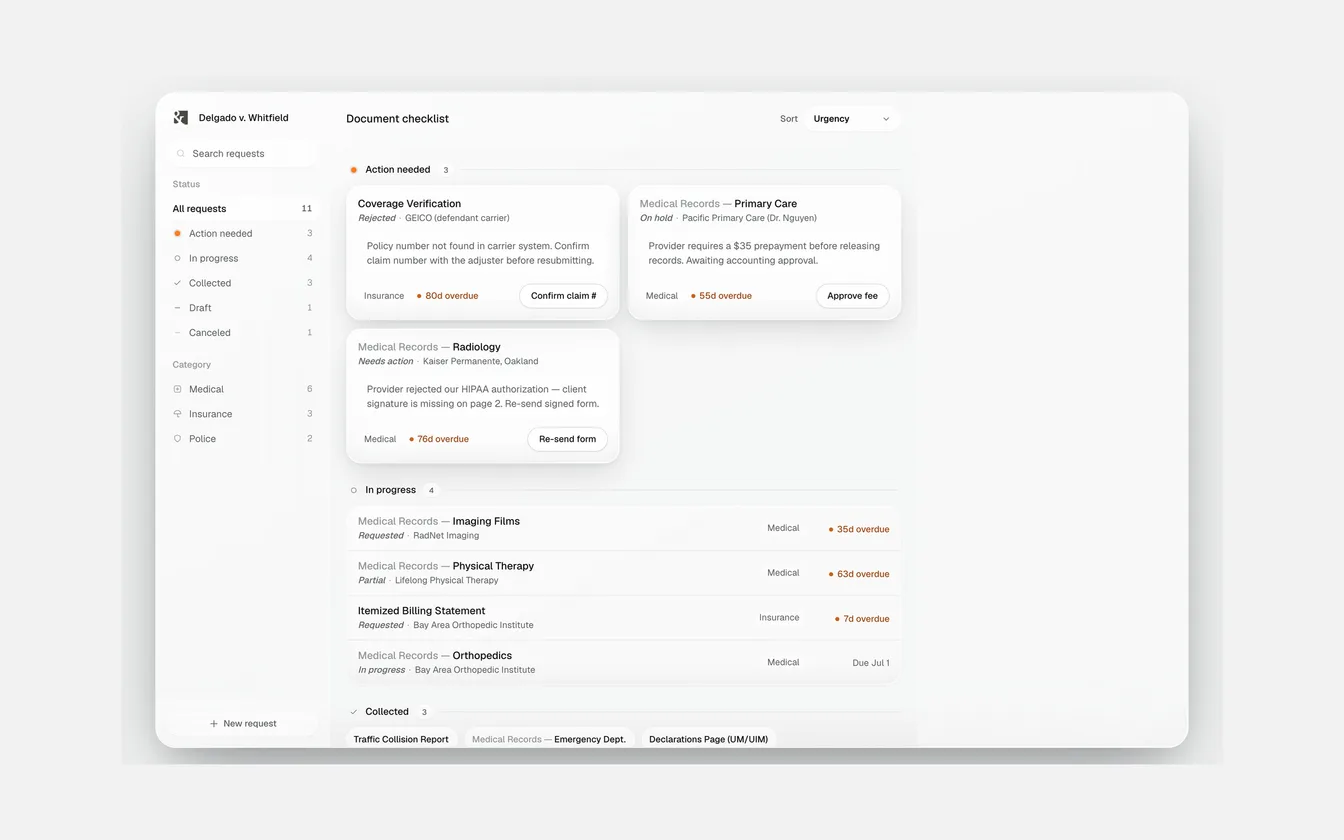
What's done, what's stuck, and what needs me right now?
The problem
Paralegals at personal-injury firms chase a dozen document requests per case: police reports, medical records, insurance verifications. Each one waits on a slow third party. Docket is a triage board for that work. I designed and built it alone in a 48-hour sprint.
Think in states, not screens
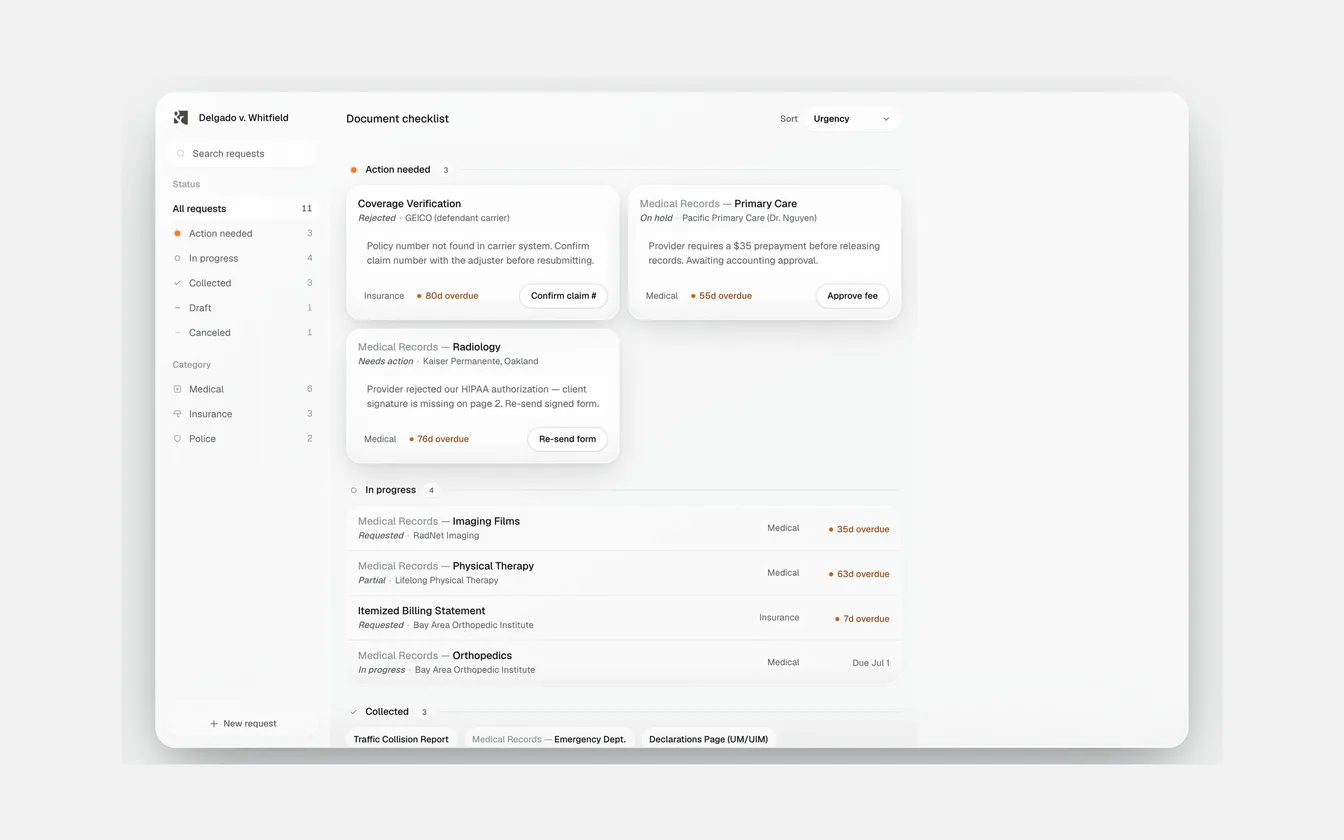
Nine lifecycle statuses collapse into five buckets, ordered by what the paralegal should do next. Blocked requests rise to the top with the blocker spelled out and a one-click action: re-send the form, approve the fee, confirm the claim number. Overdue is a flag, not a status, shown in one warm accent used for nothing else.
One request, the whole story
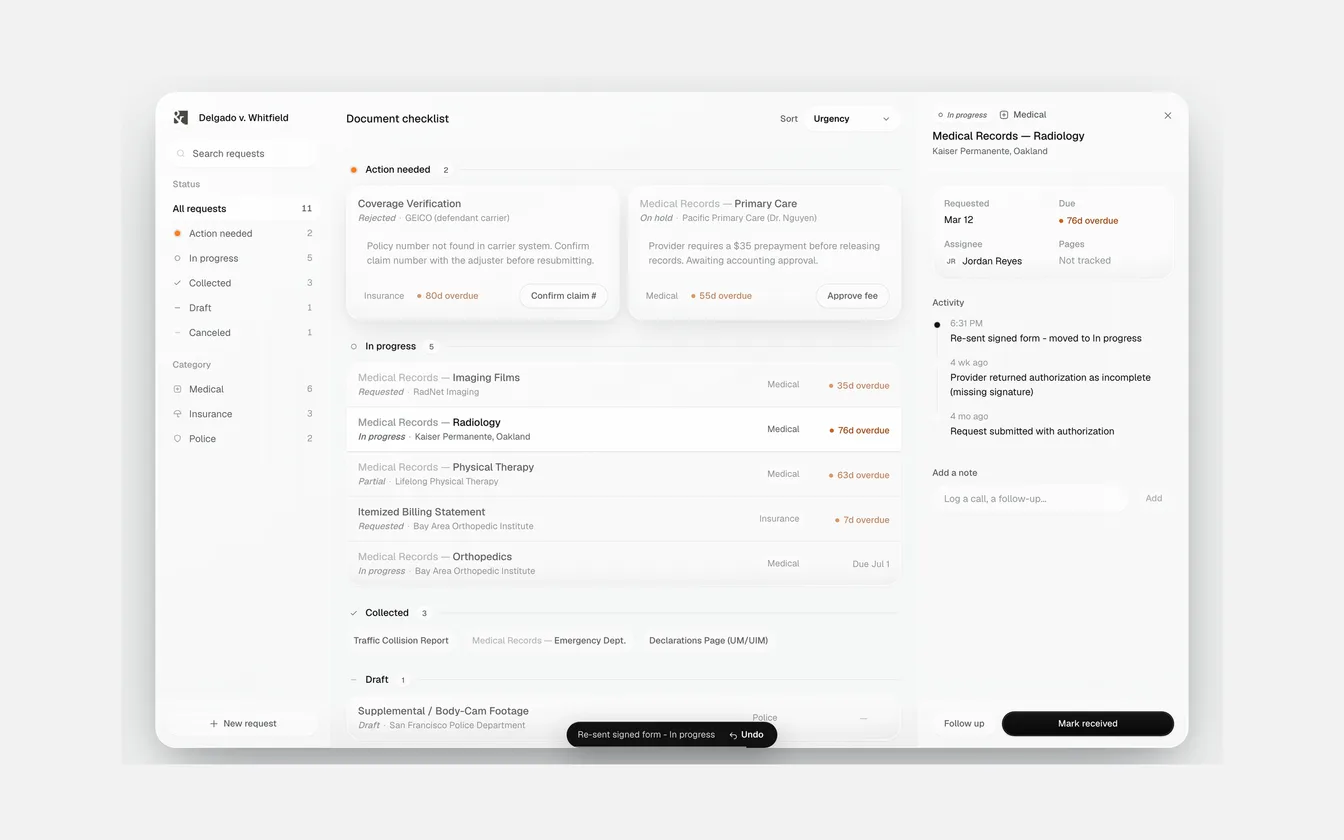
Selecting a card opens the full record: dates, assignee, expected pages, the blocker in plain language, an activity timeline, and a notes field for logging a call. The primary button follows the state. A blocked request offers Re-send form. One in flight offers Mark received.
Actions that can revert
Every action applies immediately. The card moves, the timeline logs it, and an undo toast waits at the bottom. There are no confirmation dialogs.
Drafts save as you type
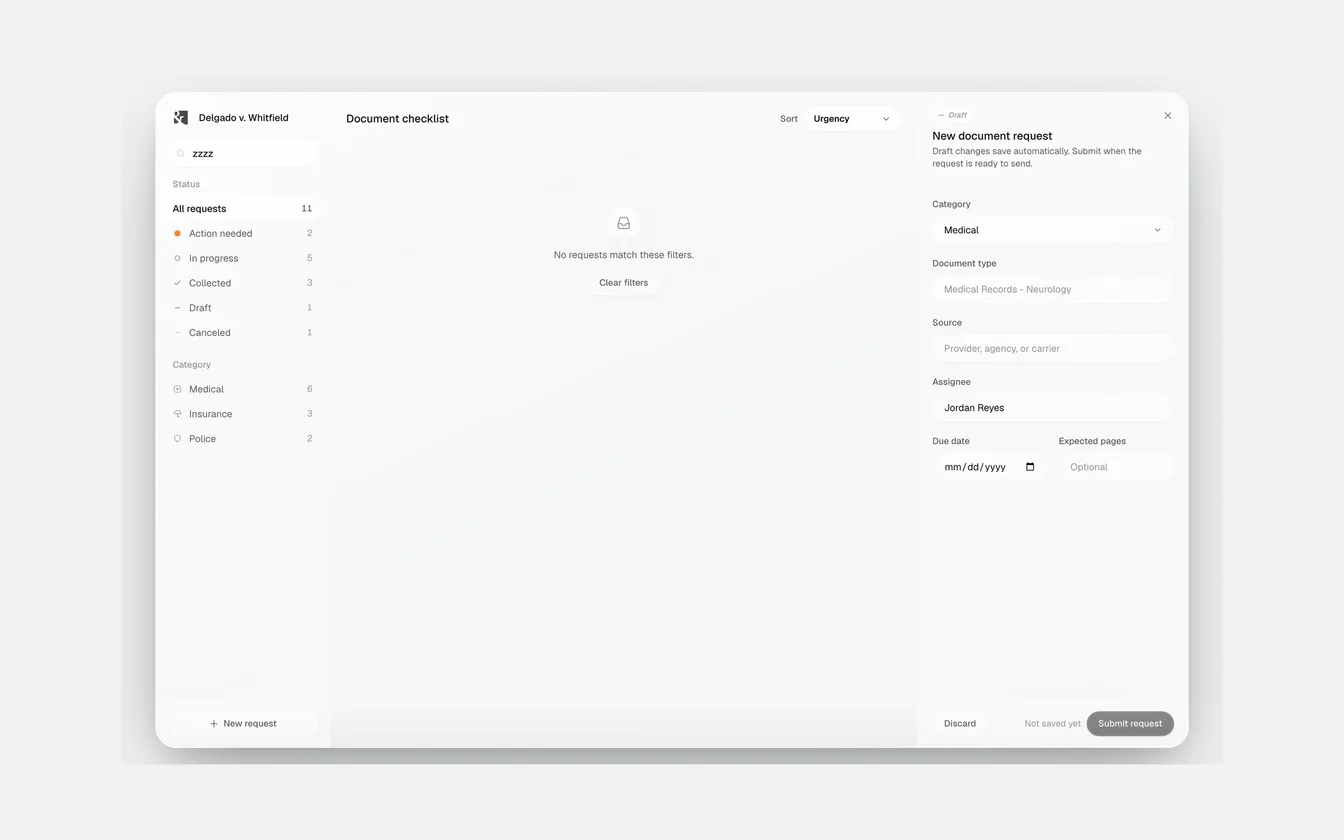
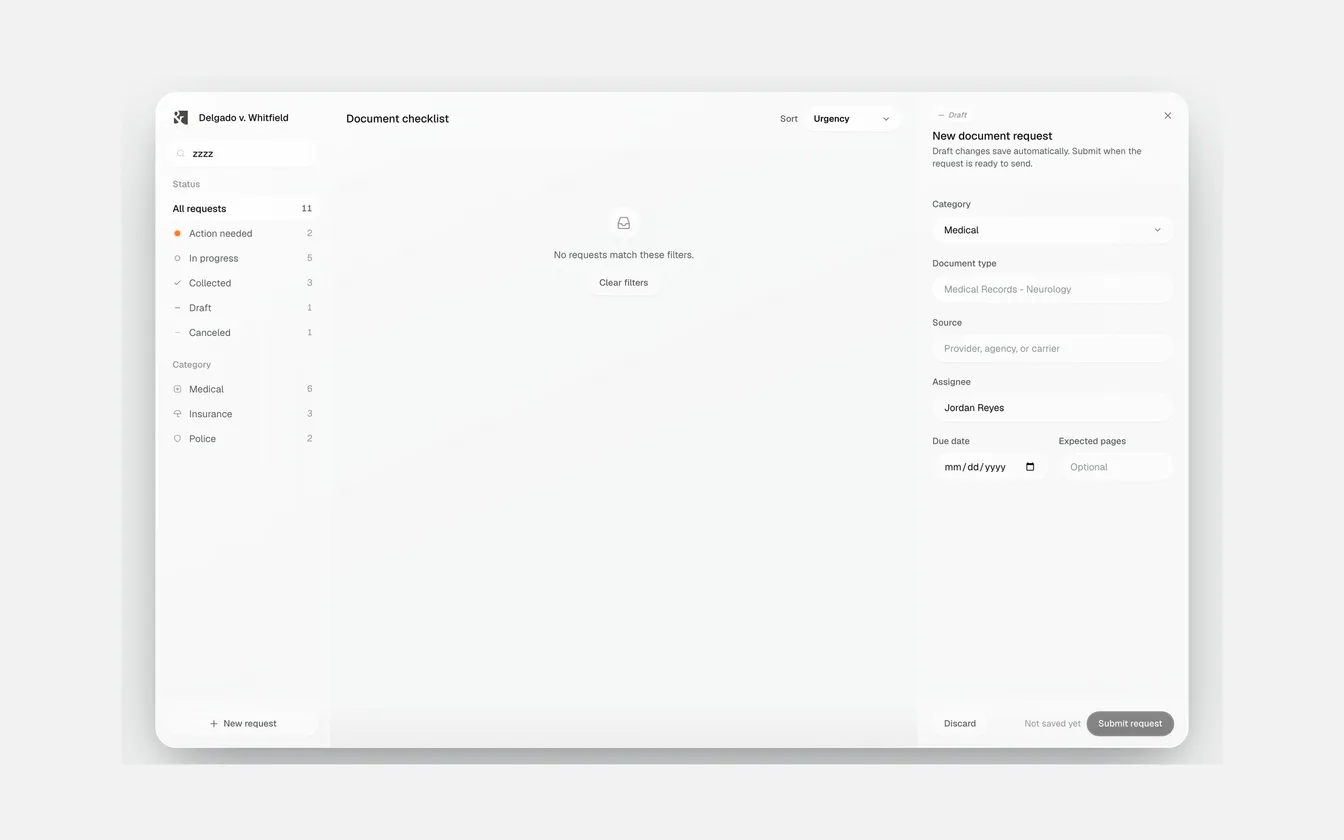
New requests start as drafts in the same pane: category, document type, source, assignee, due date. Changes save automatically, and submitting drops the request into the live checklist.
Unhappy paths, designed
The sample case includes rejected, on-hold, and partially received requests, plus empty and loading states. A search with no matches gets a real empty state with a way back.
Details
| Year | 2026 |
|---|---|
| Role | Design Engineer |
| Focus | UIUX design, Design System, Frontend, Legal Tech |
| Context | Solo 48-hour build sprint, June 2026 |
| Stack | Next.js 16, React 19, TypeScript, Tailwind CSS v4, Vitest |
| Design system | Token-driven: color, type scale, radius, and shadow defined once, components built from a small reusable kit |