Climate advice you act on in VR, inside a scan of your own room, by Joseph Wu.
Climate advice is easier to act on when you can see it in your own room.
What it is
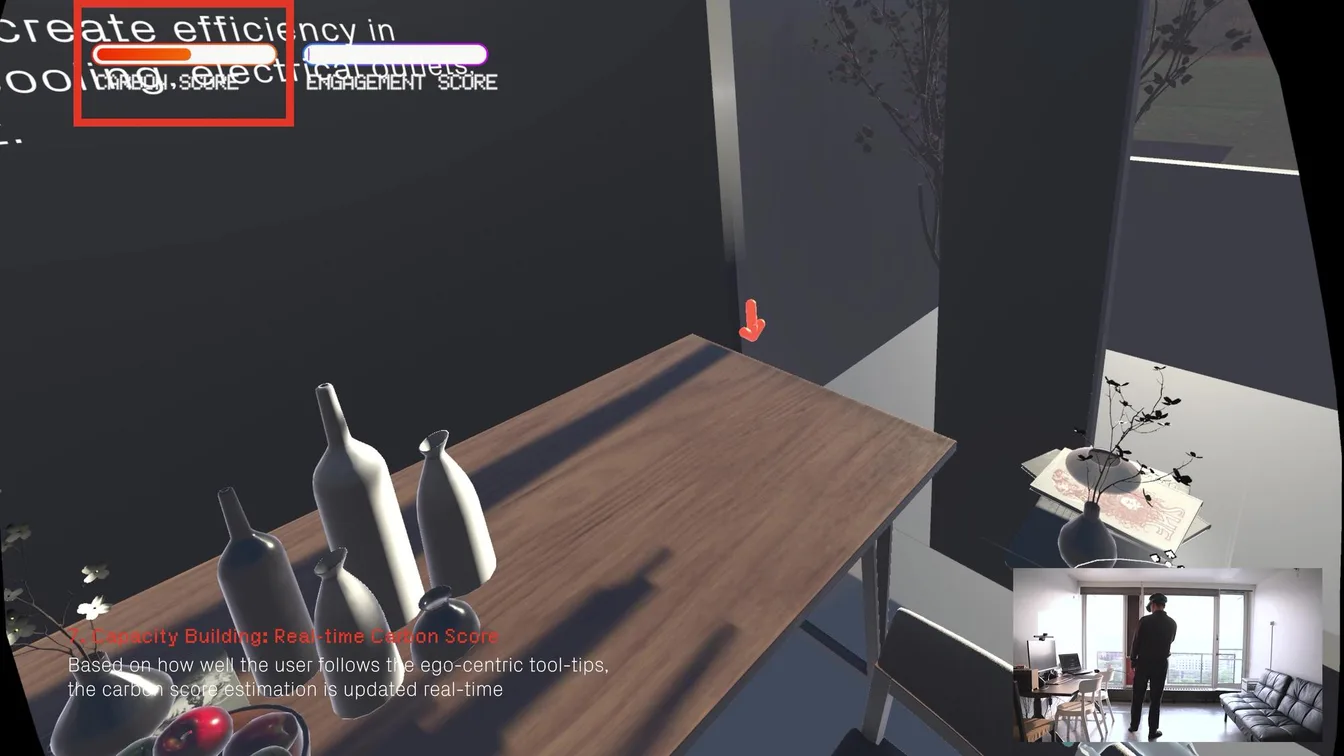
Anthroposense combines an LLM, a digital twin of your room, and VR. In the headset a recommendation becomes a task: move the side table, shift the sofa, let in more daylight. A carbon score updates as you go.
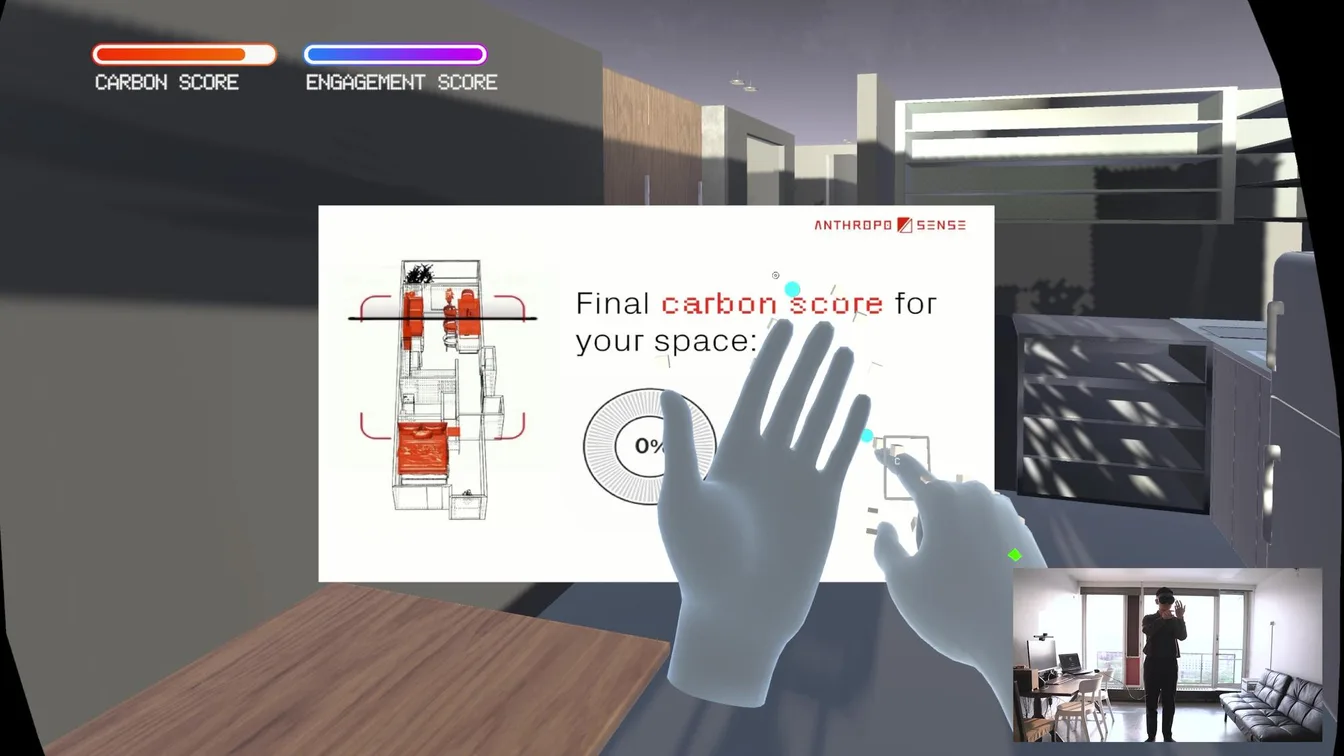
The final carbon score
A session ends with a carbon score for the room. A plan view marks what moved, so the number reads as a before and after.
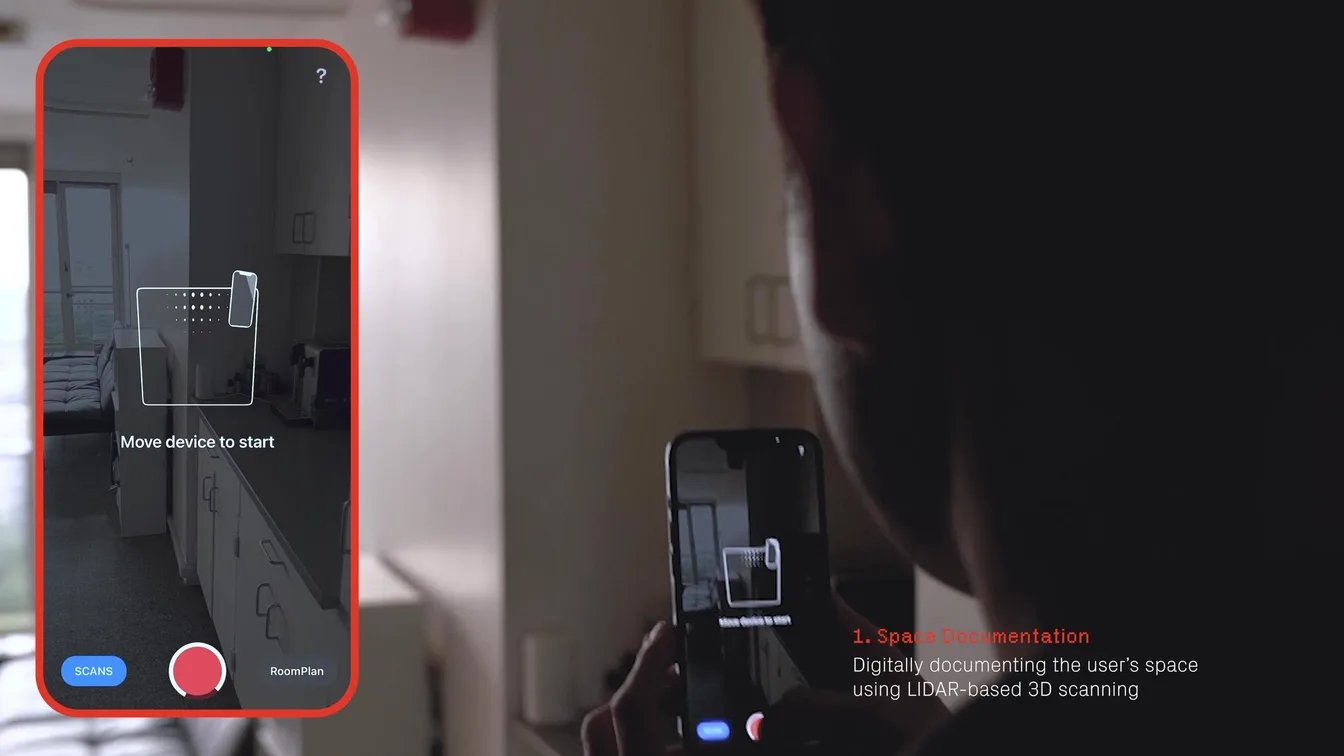
Scanning the room
It starts with a scan. You capture your room with a LiDAR app, and that scan becomes the twin the recommendations run on.
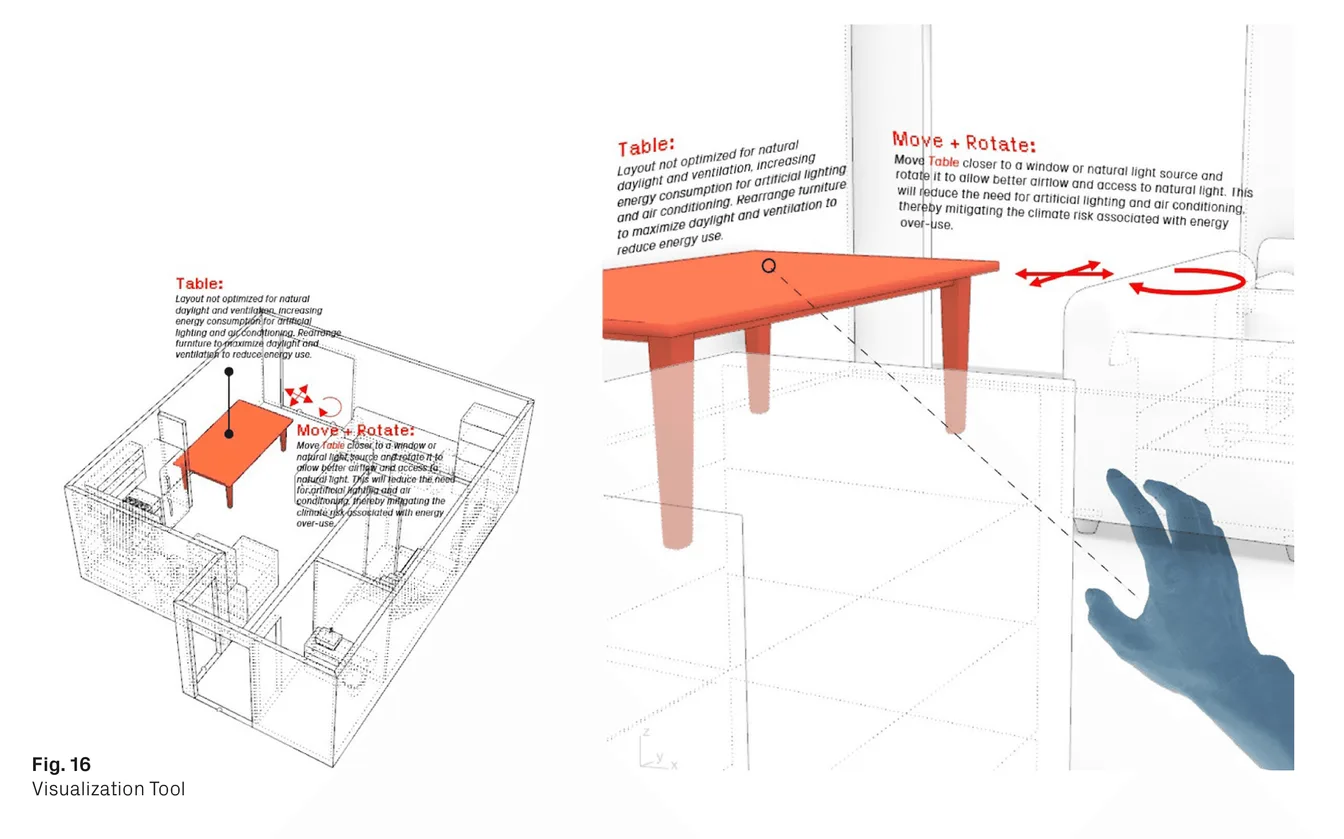
Why things move
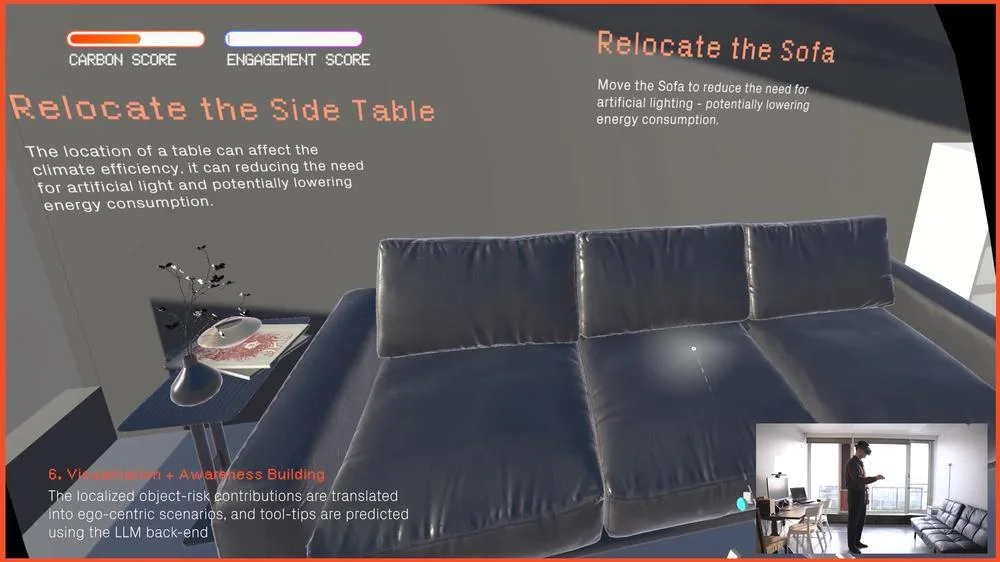
Tooltips explain each suggestion. They tie a table's position to daylight, ventilation, artificial lighting, and air-conditioning load.
Live carbon feedback
The score changes with every move. That feedback is the reason to do this in VR and not in a report.
Testing in real rooms
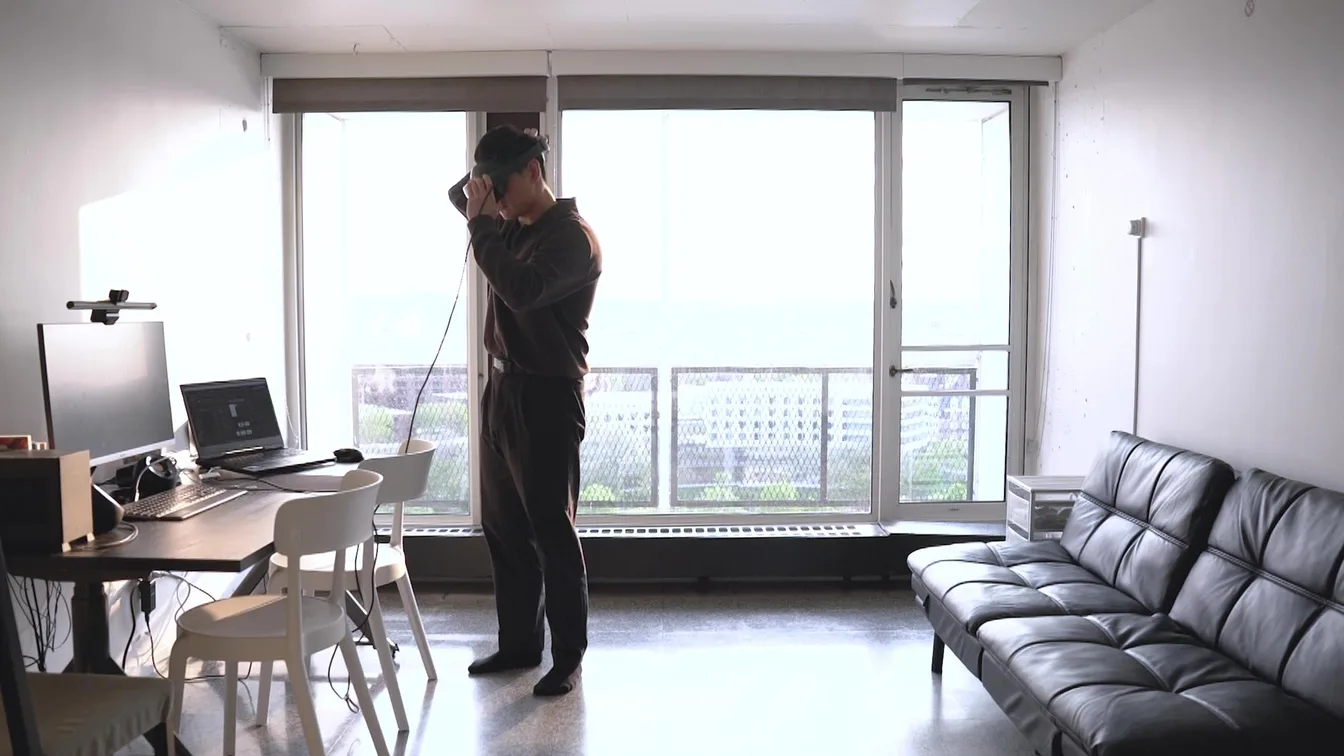
The prototype ran on Oculus with Microsoft MRTK and Unity. We tested it in people's own rooms instead of a generic scene.
Details
| Year | 2023 |
|---|---|
| Role | Software Prototyper, Researcher |
| Focus | LLM, Virtual Reality, HCI, 3D Reconstruction |